Hat Tip: Evolutionistrue
There is this supercool new divergence time calculator available at Time Tree. Type in the name of any two species and if there is data it will provide you the divergence time. For those of you true tech/biology nerds, there's an iphone app. It did make me wonder if there are any scientists left who still used graph paper, rulers, pencils and the old fashioned calculators...
Showing posts with label commentary on science. Show all posts
Showing posts with label commentary on science. Show all posts
April 10, 2011
March 18, 2011
I wish I had US citizenship.
For those minority postdocs and early career tt who are US citizens or permanent residents, apply for this award.
If I could I totally would apply.
I have faced this problem over and over again. As a scientist from an underrepresented minority, I would love to apply for the different postdoctoral fellowships and awards aimed at me. But because I am not a US citizen or a permanent resident, I'm not eligible. Unfortunately there is nothing like the Ford Fellowship, or FASEB (Federal American Societies of Experimental Biology) awards in Canada. As far as I'm aware no federal Canadian organizations offer this kind of support to its minority scientists. And with Stephen Harper I'm not holding my breath that NSERC or CIHR will have the money to do this. NSERC canned the University Faculty Awards designed to increase the representation and retention of women in academic tt positions. The last awards were given in 2008. I know someone who was lucky enough to get one of these. Timing is everything.
So those of you who can, take advantage of this support while it still exists! Here's the description of the award.
If I could I totally would apply.
I have faced this problem over and over again. As a scientist from an underrepresented minority, I would love to apply for the different postdoctoral fellowships and awards aimed at me. But because I am not a US citizen or a permanent resident, I'm not eligible. Unfortunately there is nothing like the Ford Fellowship, or FASEB (Federal American Societies of Experimental Biology) awards in Canada. As far as I'm aware no federal Canadian organizations offer this kind of support to its minority scientists. And with Stephen Harper I'm not holding my breath that NSERC or CIHR will have the money to do this. NSERC canned the University Faculty Awards designed to increase the representation and retention of women in academic tt positions. The last awards were given in 2008. I know someone who was lucky enough to get one of these. Timing is everything.
So those of you who can, take advantage of this support while it still exists! Here's the description of the award.
Advanced postdocs or new assistant professors who belong to underrepresented minorities and have "demonstrated research productivity" are invited to apply for one of the 6 Postdoctoral Professional Development and Enrichment Awards presented annually by the Federation of American Societies for Experimental Biology (FASEB). Each winner receives $3000 in unrestricted career development funds plus $2500 in travel funds.
Applicants must be US citizens or permanent residents and members of one of the FASEB constituent societies. The deadline is May 31. Application information is here.
March 8, 2011
Oh the journey...
I know this is a few days old but Adam Ruben has written the most hilarious post on how we, as scientists, came to be. After reading it, I remembered a small but painful exchange with a high school friend, with whom I had somehow lost touch with.
As I was leaving this high school friend's birthday party I mentioned where and what I was going to be doing. She looked at me with such disgust, dangled her charm bracelet with high-paying job, husband, and mortgage in my face and asked "When are you going to grow up and get a real job?"
It's even more painful to think back on my weak reply of, "Money isn't everything, I'm following my dream."
Groan. Are you really for real? If I could go back, I give me a good smack on the back of the head and tell me to "Stop being so bloody naive. Wake up stupid. Grad school is not a dream, it's a nightmare that doesn't stop."
You should really read the whole article but in case you can't, here's the meat. My favourite is the last one.
As I was leaving this high school friend's birthday party I mentioned where and what I was going to be doing. She looked at me with such disgust, dangled her charm bracelet with high-paying job, husband, and mortgage in my face and asked "When are you going to grow up and get a real job?"
It's even more painful to think back on my weak reply of, "Money isn't everything, I'm following my dream."
Groan. Are you really for real? If I could go back, I give me a good smack on the back of the head and tell me to "Stop being so bloody naive. Wake up stupid. Grad school is not a dream, it's a nightmare that doesn't stop."
You should really read the whole article but in case you can't, here's the meat. My favourite is the last one.
It may be helpful to explore how we scientists arrived at our careers, starting from the beginning. Here, then, are the thoughts of a developing scientist throughout the education process, along with the science questions explored at each age:
A scientist in preschool: Yet again, the triangle-shaped block fits into the triangle-shaped hole. Fascinating. Analysis will likely reveal statistical significance regarding this fact, but first I should further explore the block's properties by attempting to eat it.
Science questions explored: How are plants different from animals? What are the parts of the body? How does food become solid waste? Which other child has a head made out of solid waste? What rhyming chants should accompany such an accusation?
A scientist in elementary school: This week, a man came to our school and talked about science. He wore a white coat, brought lots of gadgets, and made things explode and freeze. He must be the coolest man in the world! How does he know so much? I'll bet he has tons of friends. When I grow up, I want to be just like him, except maybe not with that weird moustache.
Science questions explored: How do tadpoles develop into frogs? How do butterflies -- hmm, it looks like we should go back to the tadpole-frog thing for another few weeks because you kids don't seem to be getting it. Ok, the tadpole -- can we pay attention, please? Eyes up front. Could we please stop throwing the tadpoles? I'll wait.
A scientist in middle school: Some of my classmates seem to have gotten large and confident very quickly. And the kids with the most friends are the ones who think science is lame. But I want friends. And I don't think science is lame. Ah, the eternal question: WWDHD? ("What would Don Herbert do?")1
Science questions explored: What is the difference between "weight" and "mass," and why won't you understand it no matter how many times it's explained? What is static electricity, and why won't you understand it no matter how many times it's explained? What is a hypothesis, and why won't you understand it no matter how many times it's explained?
A scientist in high school: The kids who beat me up last year are gone. They're off working or smoking things or being pregnant, while I get to take AP physics and learn how far a cube would travel up a frictionless incline when propelled by a spring. Important stuff! Hey, I even joined the Science Club, which seems to exist only to assure us that we socially rank above the Math Club. Except that most of us are also in the Math Club.
Science questions explored: How did human beings evolve? Just kidding. Your parents would kill me if I taught that. Let's just draw some more Lewis dot structures.
A scientist in college: Actual science researchers are teaching me actual science, and I get to take actual lab classes and wear actual goggles! Now I'm finally doing real experiments asking real questions -- provided those questions can be answered using scientific equipment from 1978. (Incidentally, that's a neat volumetric flask. Oh, I see, it holds 500 mL of water. I wonder whether that means it'll hold 500 mL of beer. Go science!)
Science questions explored: Why is Orgo at 8:00 a.m.?
A scientist in grad school: Uh ... uh-oh. I thought I knew what science was, but I was dead wrong. Apparently "science" means "work," and in grad school, it means "work for which I'm scarcely paid." Hello, high school acquaintance at my 10-year reunion! Oh, you work in finance? Neat. Wait, you have how many houses? Wait, your spouse is how hot? Me? Well, unlike you, I'm smart. So I work 14-hour days and make $15,000 a year. Because I'm smart. Stop laughing.
Science questions explored: Whyyyyyyyyyyyyyyyyyyyyyyyyyyyyyyyyyyyy???????????
Postdoctoral fellowship: Seriously? I survived 7 years of grad school, and I'm still not a scientist?
Science questions explored: Seriously?
January 6, 2011
The Gathering Storm
Fact: United States consumers spend significantly more on potato chips than the government devotes to energy R&D.
Fact: In 2000 the number of foreign students studying the physical sciences and engineering in United States graduate schools for the first time surpassed the number of United States students.
Fact: China is now second in the world in its publication of biomedical research articles, having recently surpassed Japan, the United Kingdom, Germany, Italy, France, Canada and Spain.
Fact: Sixty-nine percent of United States public school students in fifth through eighth grade are taught mathematics by a teacher without a degree or certificate in mathematics.
December 21, 2010
Of mice and men.
During my PhD, I had a fair number of friends who were non-scientist types. Many of these people were writers, musicians, and visual artists. And I really valued having friends who were not associated with LargeUniversityInCanada or were not scientists. But there were times when I would find it challenging. These challenging times included parties when my work was the subject of conversation.
Party conversations often went as follows:
Partygoer: "So what do you do?"
Girlpostdoc: "I'm a Phd in Genetics."
Partygoer: "Oh my gosh - you must be super smart?"
Girlpostdoc: "Not really"
Partygoer: "You aren't one of those crazy scientists who support GMOs?"
At this point, I would ask them what they meant by GMO. Sometimes the answer was garbled but more often there was a fundamental misunderstanding. And I would do my best to explain that we have been eating genetically modified foods for a long time.
A really good blogpost on the subject is here.
Then the topic would switch to what I did. And at first I would sincerely try to explain my research, but you know that glazed-eye look, well I would always get that. But this was my fault because, at the time, I was so bad at communicating science to a general audience.
Frustration led to, well, complete fabrication. Don't judge me. I was young and stupid.
Party conversations often went as follows:
Partygoer: "So what do you do?"
Girlpostdoc: "I'm a Phd in Genetics."
Partygoer: "Oh my gosh - you must be super smart?"
Girlpostdoc: "Not really"
Partygoer: "You aren't one of those crazy scientists who support GMOs?"
At this point, I would ask them what they meant by GMO. Sometimes the answer was garbled but more often there was a fundamental misunderstanding. And I would do my best to explain that we have been eating genetically modified foods for a long time.
A really good blogpost on the subject is here.
Then the topic would switch to what I did. And at first I would sincerely try to explain my research, but you know that glazed-eye look, well I would always get that. But this was my fault because, at the time, I was so bad at communicating science to a general audience.
Frustration led to, well, complete fabrication. Don't judge me. I was young and stupid.
December 17, 2010
The slipperiness of empirical truth
I just finished reading an engaging article in The New Yorker, called "The Truth Wears Off." The author Jonah Lehrer talks about a problem that many scientific disciplines face - it's called the decline effect. The decline effect is when well-established and multiply confirmed empirical studies begin to show a reduced effect size or are no longer provable.
One example of this is called the phenomenon of "verbal overshadowing" demonstrated by a psychologist named Jonathan Schooler in 1990. He showed that subjects shown a face and asked to describe it are LESS likely to recognize the face when shown the same face later than those who simply view the face. But Schooler states in this New Yorker article that he has since found it difficult to replicate this earlier finding. He says,
"It was as if nature gave me this great result and then tried to take it back."
One example of this is called the phenomenon of "verbal overshadowing" demonstrated by a psychologist named Jonathan Schooler in 1990. He showed that subjects shown a face and asked to describe it are LESS likely to recognize the face when shown the same face later than those who simply view the face. But Schooler states in this New Yorker article that he has since found it difficult to replicate this earlier finding. He says,
"It was as if nature gave me this great result and then tried to take it back."
November 20, 2010
October 26, 2010
To share or not to share?
Over at Academic Jungle, GMP has a controversial post on sharing code. A scientist requested some code that was used in a published manuscript. She says this in her post,
"I actually replied politely, thanking him/her for the interest and stating that regrettably I cannot share the code. My group develops detailed microscopic simulations of certain physical phenomena. These codes can have wonderful predictive power and take years to develop. Sharing the codes is absolutely not the norm in my field, and there is no way in hell I would share any of my research codes with anyone other than close collaborators and colleagues.
Now most of the responses from commenters are in complete disagreement with GMP and I want to add I believe that it is utterly wrong to deny any request of published data to anyone, if the science is publicly funded.
But before jumping on GMP and calling this "despicable behavior," I think it's important to delve a little more into this issue.
GMP would not be first researcher who has refused to share. According to Heather Piwowar at Research Remix, almost 40% of scientists are not willing to release data. Why? It could be as in the case of GMP, an outright refusal, or because researchers are "not able to retrieve the data."
How many of you who are now well past your graduate work could provide data from a paper in your postdoc or PhD?
I have experienced this problem when I wrote to request data from someone who completed their PhD in the early 90s . The person responded by saying they didn't have a copy of it anymore, but that they could send summary tables from their dissertation. I wanted the original data because I felt that the analysis used at the time was incorrect and sending me the summary tables simply recapitulates the analysis.
GMP's post indirectly raises the issue of do we share data?
First, I define data to include but not limited to cell lines, evolved critters, genetic data, morphological measurements, images, maps, character matrices, seeds, and maybe (with some qualifications), computer code.
I am firmly in the camp of yes, we share data. If it's published, its not yours anymore. (Not that I really think it ever was...but that's another blogpost.)
In an editorial written in the journal Evolution, Rausher et al. (2010) outline the reasons for data sharing. As they highlight, much of our progress in understanding the natural world depends on building upon previously collected data. But too often that original data (not summary stats) is lost because the researcher just moved too many times or technology advances such that the data irretrievable. Who remembers floppy discs or zip discs? I have stuff that I can't access on a floppy and not that it matters, but in 10-20 years when whatever we're using now, becomes useless, how will anyone be able to access that data? An online database would preserve our scientific history.
Researchers typically refuse to share data for many reasons, probably top among these reasons is that they want to publish more papers and/or they want exclusive use of the data. But let's say decades later, after the faculty member retires, a young upstart researcher wants to conduct a meta-analyses on original data. A common data repository would make this young person's life a lot easier. And as Piwowar states in her slideshow called Research into Open Research Data, not sharing data is hurting mainly the young. She cites a survey of doctoral students and postdocs, saying that 28-50% report a negative impact from data withholding on progress, discovery and the quality of education.
Rausher et al. (2010) also suggest that data that is archived and available is more likely to be useful and to be cited more by other scientists. We only have to look to GenBank to see that this repository has afforded many different researchers a chance to use data collected by others to ask very different questions.
A final reason that we should share our scientific data is accountability. Data that is made accessible means that it can be checked for errors. Good data means good science and progress. According to Piwowar, more than half of all papers contain errors, but only 5-10% contain errors that change conclusions. Sigh of relief.
Recently, several journal editors within the ecology and evolution subdiscipline of biology came together to form DRYAD.
Already journals like The American Naturalist (American Society of Naturalists), Evolution (Society for the Study of Evolution), Molecular Ecology, Journal of Evolutionary Biology (European Society for Evolutionary Biology) have become interim partners with Dryad. These journals will be introducing a new data-archiving policy which will state that as a condition for publication, data used in the paper should be archived into an appropriate public database. The policy does, however, allow for an embargo period after publication and for longer periods of restriction at the discretion of the editor.
So what about computer code?
Unfortunately, Dryad is not set up to accept computer code. My programming friends tell me that the main reason coding geeks are reluctant to share code is the licensing problem. Freely available code means that anyone can take your code and use it to make a commercial program that they could then sell for cash. A second reason, I'm told is that computer code is dynamic and changing unlike data that is collected. For computer nerds, it's important that code change and evolve because that makes it better. And really in my field when I think about it, this is true. But, some of that evolution comes because the code is made public. Feedback from the user is essential to finding the bugs or problems with a given code.
In a recent article to Nature, Nick Barnes, a software computer engineer suggests that turning raw data into published papers requires a little programming, meaning that scientists write software. And he argues that yes, it isn't very good because of poor commenting, weird variable names and a lack of indentation. But it works. And if it works it should be made accessible.
But I would ask, all of it? Some of my R code is just a one-off and it isn't really necessary that I archive it. I do, however, have code that is associated with a particular dataset and could be useful to future users. And I would like to deposit my code somewhere and ensure that it was associated with that particular dataset.
Luckily for us in biology, things are improving, we have places where we can access shared code. Often the code is located in websites run by researchers but this means that it is essentially anywhere in the web. What is needed is a single resource where users can find and share code. Well, a new place called The Molecular Ecologist, associated with the journal Molecular Ecology Resources will provide a blog that highlights important papers in the field; list computer programs and other code (e.g. R packages) useful for analyzing genetic data; and a site to discuss methods.
I know it's a lot of work getting your "data" ready for submission - there's the formatting, the organizing, and the worry about mistakes being found or the data being misinterpreted.
But in the end, I feel better for having submitted data to a public repository. After all that blood, sweat and tears, I don't really want my hard work to end up in a black hole.

Photo taken from Website: Astronomy Picture of the Day
Other Sources: Rausher MD, McPeek MA, Moore AJ, Rieseberg L, Whitlock MC. 2010. Data archiving. Evolution. 64-3: 603-604.
"I actually replied politely, thanking him/her for the interest and stating that regrettably I cannot share the code. My group develops detailed microscopic simulations of certain physical phenomena. These codes can have wonderful predictive power and take years to develop. Sharing the codes is absolutely not the norm in my field, and there is no way in hell I would share any of my research codes with anyone other than close collaborators and colleagues.
Now most of the responses from commenters are in complete disagreement with GMP and I want to add I believe that it is utterly wrong to deny any request of published data to anyone, if the science is publicly funded.
But before jumping on GMP and calling this "despicable behavior," I think it's important to delve a little more into this issue.
GMP would not be first researcher who has refused to share. According to Heather Piwowar at Research Remix, almost 40% of scientists are not willing to release data. Why? It could be as in the case of GMP, an outright refusal, or because researchers are "not able to retrieve the data."
How many of you who are now well past your graduate work could provide data from a paper in your postdoc or PhD?
I have experienced this problem when I wrote to request data from someone who completed their PhD in the early 90s . The person responded by saying they didn't have a copy of it anymore, but that they could send summary tables from their dissertation. I wanted the original data because I felt that the analysis used at the time was incorrect and sending me the summary tables simply recapitulates the analysis.
GMP's post indirectly raises the issue of do we share data?
First, I define data to include but not limited to cell lines, evolved critters, genetic data, morphological measurements, images, maps, character matrices, seeds, and maybe (with some qualifications), computer code.
I am firmly in the camp of yes, we share data. If it's published, its not yours anymore. (Not that I really think it ever was...but that's another blogpost.)
In an editorial written in the journal Evolution, Rausher et al. (2010) outline the reasons for data sharing. As they highlight, much of our progress in understanding the natural world depends on building upon previously collected data. But too often that original data (not summary stats) is lost because the researcher just moved too many times or technology advances such that the data irretrievable. Who remembers floppy discs or zip discs? I have stuff that I can't access on a floppy and not that it matters, but in 10-20 years when whatever we're using now, becomes useless, how will anyone be able to access that data? An online database would preserve our scientific history.
Researchers typically refuse to share data for many reasons, probably top among these reasons is that they want to publish more papers and/or they want exclusive use of the data. But let's say decades later, after the faculty member retires, a young upstart researcher wants to conduct a meta-analyses on original data. A common data repository would make this young person's life a lot easier. And as Piwowar states in her slideshow called Research into Open Research Data, not sharing data is hurting mainly the young. She cites a survey of doctoral students and postdocs, saying that 28-50% report a negative impact from data withholding on progress, discovery and the quality of education.
Rausher et al. (2010) also suggest that data that is archived and available is more likely to be useful and to be cited more by other scientists. We only have to look to GenBank to see that this repository has afforded many different researchers a chance to use data collected by others to ask very different questions.
A final reason that we should share our scientific data is accountability. Data that is made accessible means that it can be checked for errors. Good data means good science and progress. According to Piwowar, more than half of all papers contain errors, but only 5-10% contain errors that change conclusions. Sigh of relief.
Recently, several journal editors within the ecology and evolution subdiscipline of biology came together to form DRYAD.
"Dryad is an international online repository of data underlying peer-reviewed articles in the basic and applied biosciences. Dryad enables scientists to validate published findings, explore new analysis methodologies, repurpose data for research questions unanticipated by the original authors, and perform synthetic studies. Dryad is governed by a consortium of journals that collaboratively promote data archiving and ensure the sustainability of the repository."
Already journals like The American Naturalist (American Society of Naturalists), Evolution (Society for the Study of Evolution), Molecular Ecology, Journal of Evolutionary Biology (European Society for Evolutionary Biology) have become interim partners with Dryad. These journals will be introducing a new data-archiving policy which will state that as a condition for publication, data used in the paper should be archived into an appropriate public database. The policy does, however, allow for an embargo period after publication and for longer periods of restriction at the discretion of the editor.
So what about computer code?
Unfortunately, Dryad is not set up to accept computer code. My programming friends tell me that the main reason coding geeks are reluctant to share code is the licensing problem. Freely available code means that anyone can take your code and use it to make a commercial program that they could then sell for cash. A second reason, I'm told is that computer code is dynamic and changing unlike data that is collected. For computer nerds, it's important that code change and evolve because that makes it better. And really in my field when I think about it, this is true. But, some of that evolution comes because the code is made public. Feedback from the user is essential to finding the bugs or problems with a given code.
In a recent article to Nature, Nick Barnes, a software computer engineer suggests that turning raw data into published papers requires a little programming, meaning that scientists write software. And he argues that yes, it isn't very good because of poor commenting, weird variable names and a lack of indentation. But it works. And if it works it should be made accessible.
But I would ask, all of it? Some of my R code is just a one-off and it isn't really necessary that I archive it. I do, however, have code that is associated with a particular dataset and could be useful to future users. And I would like to deposit my code somewhere and ensure that it was associated with that particular dataset.
Luckily for us in biology, things are improving, we have places where we can access shared code. Often the code is located in websites run by researchers but this means that it is essentially anywhere in the web. What is needed is a single resource where users can find and share code. Well, a new place called The Molecular Ecologist, associated with the journal Molecular Ecology Resources will provide a blog that highlights important papers in the field; list computer programs and other code (e.g. R packages) useful for analyzing genetic data; and a site to discuss methods.
I know it's a lot of work getting your "data" ready for submission - there's the formatting, the organizing, and the worry about mistakes being found or the data being misinterpreted.
But in the end, I feel better for having submitted data to a public repository. After all that blood, sweat and tears, I don't really want my hard work to end up in a black hole.

Photo taken from Website: Astronomy Picture of the Day
Other Sources: Rausher MD, McPeek MA, Moore AJ, Rieseberg L, Whitlock MC. 2010. Data archiving. Evolution. 64-3: 603-604.
October 1, 2010
Are you sleeping too much?
Well if I were a 50-81 year old woman that might be true.
A new study in the journal Sleep Medicine found that women who sleep between 5 and 6.5 hrs a night were more likely to live longer. Researchers at UC San Diego followed 459 women ranging in ages 50-81 to figure out if sleep duration had anything to do with mortality. The original research was conducted between 1995 and 1999 and headed by Daniel F. Kripke, MD, professor emeritus of psychiatry at UC San Diego School of Medicine. Fourteen years later, he looked up his original participants to see who was alive.
From ScienceBlog, here's a quote:
Okay so here's the problem, the headline at ScienceBlogs reads, "Women’s study finds longevity means getting just enough sleep."
But based on the small bit of information provided by the ScienceBlogs article, this study was specifically about women between the ages of 50-81. Secondly, if you're 81 years old, whether you sleep 10h or 5 h, my guess is that in 14 years (when you are 94) its unlikely you'll be alive anyway. In this study 86 women died. Unfortunately, I can't get access to the original scientific article so I can't assess what were the characteristics of these women? Also is it actually sleep or is it a specific kind of rest?
I realize that science news tries to sell itself because it is a business, but in the process it trades off the facts. One major consequence of exaggerated or inaccurate science reporting that is the public's perception of science and scientists is often mistrustful.
Need I mention ants?
A new study in the journal Sleep Medicine found that women who sleep between 5 and 6.5 hrs a night were more likely to live longer. Researchers at UC San Diego followed 459 women ranging in ages 50-81 to figure out if sleep duration had anything to do with mortality. The original research was conducted between 1995 and 1999 and headed by Daniel F. Kripke, MD, professor emeritus of psychiatry at UC San Diego School of Medicine. Fourteen years later, he looked up his original participants to see who was alive.
From ScienceBlog, here's a quote:
"The surprise was that when sleep was measured objectively, the best survival was observed among women who slept 5 to 6.5 hours,” Kripke said. “Women who slept less than five hours a night or more than 6.5 hours were less likely to be alive at the 14-year follow-up.”
Okay so here's the problem, the headline at ScienceBlogs reads, "Women’s study finds longevity means getting just enough sleep."
But based on the small bit of information provided by the ScienceBlogs article, this study was specifically about women between the ages of 50-81. Secondly, if you're 81 years old, whether you sleep 10h or 5 h, my guess is that in 14 years (when you are 94) its unlikely you'll be alive anyway. In this study 86 women died. Unfortunately, I can't get access to the original scientific article so I can't assess what were the characteristics of these women? Also is it actually sleep or is it a specific kind of rest?
I realize that science news tries to sell itself because it is a business, but in the process it trades off the facts. One major consequence of exaggerated or inaccurate science reporting that is the public's perception of science and scientists is often mistrustful.
Need I mention ants?
September 11, 2010
The passing of one of the great evolutionary biologists.
George C. Williams died on Sept. 8 2010. To read about his influence, see David Sloan Wilson's blogpost here and a short biography by Michael Ruse here.
Williams had an impact on me as a Master's student when I read his book Adaptation and Natural Selection. It's a good read and I highly recommend it.
Williams had an impact on me as a Master's student when I read his book Adaptation and Natural Selection. It's a good read and I highly recommend it.
September 9, 2010
Adoption and altruism
It’s been a year since I first had symptoms of searing headaches, nausea and vision difficulties that lead to the detection of my brain tumor and subsequent surgeries to remove the tumor and to deal with complications from the tumor. What many don’t know is that this left me infertile.
My Ph.D. supervisor, GeneralSolutionGuru called the day after I found out, in part because we were working on a manuscript and I wasn’t able to deal with some of the revisions required immediately. She thought the brain tumor was back. When I told her, she was amazing. Compassionate, caring, and best of all - practical. GeneralSolutionGuru said that she was glad I was alive even if it meant trading off my fertility, but that she was so sorry I had to deal with the emotional fallout. We talked for a long time. And of course, one of the things that came up was adoption.
Adoption is a tricky business, especially for those who are not citizens of the country they are living and working in. As a Canadian, because neither my husband nor I have US citizenship or residency, we can’t start the adoption process – domestic or international. My preference is international, but it’s enormously expensive and frankly a single postdoc’s salary doesn’t cut it. If there are so many children needing a good home, why does it come at such a personal cost to the willing couple both in terms of time and money? It’s been said before but most fertile couples don’t have to pay a total cost of $40,000 just to get a child (at least that’s the cost internationally) – that cost comes later when the child is born, grows up, leaves the nest only to return home at the age of 30, and in some cases never to leave again.
HippieHusband and I are definitely considering it as an option, but it was this upfront cost led to me to ask the more evolutionary question, WTF? More explicitly, why do couples take on the care for another completely unrelated female’s offspring, especially when it costs so bloody much? In evolutionary biology, adoption is often cited as the primary example of altruism. This is because altruistic behaviour is defined, at least in the classical paper by Trivers (1971) as “behavior that benefits another organism, not closely related while being apparently detrimental to the organism performing the behavior.”
Another often cited example is – Is it altruistic to save a drowning man, at a cost to you? The traditional argument is only if the drowning man is completely unrelated to you in the genetic sense. Otherwise, it could simply be seen as a case of contributing to the survival of your own genes or kin selection. This is because saving the drowning man, who is genetically related to you, increases your inclusive fitness. Your genes get more copies in the next generation because you saved someone who has copies of your genes. This is famously called Hamilton’s Rule after a dude, who claimed he wouldn’t lay his life down to save a single brother, but would if it were for two brothers or eight cousins.
An alternative reason you might save the drowning man is that at some point there would be reciprocal altruism – maybe you weren’t drowning but your kid threw a rock at the drowning man’s bedroom window, it crashed through the window, and broke a very expensive Ming vase that he risked his life to get. But hey because you saved his life no harm done.
Although adoption is reported to occur in 62 different mammal species, many of these cases are among cooperatively breeding and/or highly social species where individuals within groups are genetically related. And really what international adoption, I think speaks to, is the highest level of cooperation amongst humans that are neither culturally nor genetically related.
In a paper published in PLoS One, Boesch et al. (2010) report 18 cases of adoption in a wild population of forest chimpanzees from Taï National Park, Côte d’Ivoire. These adoptions lasted in some cases for many years. The striking thing was that in captive chimpanzees cooperative behaviors are absent, but in wild populations of chimpanzees cooperative behaviors like food sharing, use of political coalitions, cooperative hunting and border patrolling are observed. These authors felt that the dichotomy between wild and captive suggested that socio-ecological factors may favor the evolution of altruism.
The authors defined adoption as any relationship between an adult and orphan infant where the adult shows species specific maternal behaviour to the child for at least two months. They also required that the adult be permanently associated with the orphan and exhibit behaviors like sharing food, providing protection during conflict, waiting during travel for the orphan. There was no obvious benefit to the adopting individuals while those chimpanzee orphans who were not adopted suffered huge costs in terms of survivorship. Those less than 5 years of age do not survive and many suffer delays in physical development. Surprisingly, the presence of close relative didn’t increase the likelihood of adoption. No gender biases were found in sex of the adopted orphan. It seemed like approximately equal numbers of males and female adults became foster parents.

One notable result was the extent and presence of parental investment in unrelated offspring by the chimpanzee males. In most polygynous primate communities, males typically do not invest much in their own offspring nor develop long term bonds with specific females. These male chimpanzees at Tai were not previously observed showing any obvious paternal behavior and yet they had adopted largely unrelated young.
Why then were these males exhibiting what the authors called altruistic behavior?
A major problem with this study was the non-estimate of the cost and benefit to the fostering chimpanzee. One suggestion the authors made about a possible long-term benefit was reciprocal altruism. Once the orphans became adults, they would become the allies of the foster males during conflict, however, males adopted both female and male orphans. But this could be extended to the case of food sharing, something the authors didn't mention. The fostering parent gets too old to forage and the adult orphan can now share the food they’ve obtained.
I imagine, however, that this scenario would easily invaded by cheaters. Adopted orphans that don’t reciprocate when it comes to conflict or food sharing.
Alternatively, Boesch et al (2010) suggested another benefit would be the improved social standing of the foster parent in the eyes of the group. This is a scenario that I think is likely to be at play in human societies. And I would imagine that in the group of chimpanzees that they followed it might be easily quantifiable. You could imagine that taking care of all members of the group in early human societies could benefit the persistence of that group.
In modern society, improved social standing may come something like this. One day you wake up and realize that you are the only one of all your friends who has yet to reproduce. People become friends with those who have similar interests. And if you are single or a couple without kids you are unlikely to have many friends who have kids and who will spend a great deal of time hanging out with you. Just take the bloggosphere. It is tremendously important to have women blog about managing career, personal life, and kids, but my connection and thus friendship with those female bloggers is limited, especially if they spend the majority of time blogging about their kids.
As I said the authors of the study didn't identify a fitness cost to the foster parents. Did the foster chimpanzees suffer reduced survivorship compared to those adults who didn’t adopt and did not have children of their own? Although I can’t put an estimate on my fitness cost, if I choose to adopt internationally, at least I know the dollar value on my upfront cost, the emotional cost, as well as my time investment away from work, and thus loss of income.
The authors suggested that because this population suffers from a high predation risk by a large population of leopards, within group solidarity in the form of care for all individuals will ultimately help the welfare of the group itself. While on the surface I feel that within group solidarity is part of if, to believe that socio-biological factors promote the evolution of altruism, these selective factors would have to be shown to be present in some significant form over many generations. From what I understand of population ecology, it is unlikely that the population of leopards would remain large and constant over time.
Finally, it was unclear whether this adoption event was a one hit wonder or if unrelated adoption actually occurs in multiple generations. Because we're talking about evolution, I'd like to know what happened in previous generations and if this practice will continue.
The authors have hit upon a really sexy topic, but their study was far from thorough. I know my own personal reasons for wanting to adopt, but this study left me highly unsatisfied as to why, from an evolutionary perspective, do humans invest so much time, money, and energy in international adoption?
Works Cited
Boesch et al. 2010. Altruism in forest chimpanzees: The case of adoption. PLoS One, vol.5(1):e8901
Trivers, R.L. 1971. The evolution of reciprocal altruism. Quarterly Review of Biology, vol.46:35-57.
Gorrell et al. 2010. Adopting kin enhances inclusive fitness in asocial red squirrels. Nature Communications, v22:1-4.
My Ph.D. supervisor, GeneralSolutionGuru called the day after I found out, in part because we were working on a manuscript and I wasn’t able to deal with some of the revisions required immediately. She thought the brain tumor was back. When I told her, she was amazing. Compassionate, caring, and best of all - practical. GeneralSolutionGuru said that she was glad I was alive even if it meant trading off my fertility, but that she was so sorry I had to deal with the emotional fallout. We talked for a long time. And of course, one of the things that came up was adoption.
Adoption is a tricky business, especially for those who are not citizens of the country they are living and working in. As a Canadian, because neither my husband nor I have US citizenship or residency, we can’t start the adoption process – domestic or international. My preference is international, but it’s enormously expensive and frankly a single postdoc’s salary doesn’t cut it. If there are so many children needing a good home, why does it come at such a personal cost to the willing couple both in terms of time and money? It’s been said before but most fertile couples don’t have to pay a total cost of $40,000 just to get a child (at least that’s the cost internationally) – that cost comes later when the child is born, grows up, leaves the nest only to return home at the age of 30, and in some cases never to leave again.
HippieHusband and I are definitely considering it as an option, but it was this upfront cost led to me to ask the more evolutionary question, WTF? More explicitly, why do couples take on the care for another completely unrelated female’s offspring, especially when it costs so bloody much? In evolutionary biology, adoption is often cited as the primary example of altruism. This is because altruistic behaviour is defined, at least in the classical paper by Trivers (1971) as “behavior that benefits another organism, not closely related while being apparently detrimental to the organism performing the behavior.”
Another often cited example is – Is it altruistic to save a drowning man, at a cost to you? The traditional argument is only if the drowning man is completely unrelated to you in the genetic sense. Otherwise, it could simply be seen as a case of contributing to the survival of your own genes or kin selection. This is because saving the drowning man, who is genetically related to you, increases your inclusive fitness. Your genes get more copies in the next generation because you saved someone who has copies of your genes. This is famously called Hamilton’s Rule after a dude, who claimed he wouldn’t lay his life down to save a single brother, but would if it were for two brothers or eight cousins.
An alternative reason you might save the drowning man is that at some point there would be reciprocal altruism – maybe you weren’t drowning but your kid threw a rock at the drowning man’s bedroom window, it crashed through the window, and broke a very expensive Ming vase that he risked his life to get. But hey because you saved his life no harm done.
Although adoption is reported to occur in 62 different mammal species, many of these cases are among cooperatively breeding and/or highly social species where individuals within groups are genetically related. And really what international adoption, I think speaks to, is the highest level of cooperation amongst humans that are neither culturally nor genetically related.
In a paper published in PLoS One, Boesch et al. (2010) report 18 cases of adoption in a wild population of forest chimpanzees from Taï National Park, Côte d’Ivoire. These adoptions lasted in some cases for many years. The striking thing was that in captive chimpanzees cooperative behaviors are absent, but in wild populations of chimpanzees cooperative behaviors like food sharing, use of political coalitions, cooperative hunting and border patrolling are observed. These authors felt that the dichotomy between wild and captive suggested that socio-ecological factors may favor the evolution of altruism.
The authors defined adoption as any relationship between an adult and orphan infant where the adult shows species specific maternal behaviour to the child for at least two months. They also required that the adult be permanently associated with the orphan and exhibit behaviors like sharing food, providing protection during conflict, waiting during travel for the orphan. There was no obvious benefit to the adopting individuals while those chimpanzee orphans who were not adopted suffered huge costs in terms of survivorship. Those less than 5 years of age do not survive and many suffer delays in physical development. Surprisingly, the presence of close relative didn’t increase the likelihood of adoption. No gender biases were found in sex of the adopted orphan. It seemed like approximately equal numbers of males and female adults became foster parents.

One notable result was the extent and presence of parental investment in unrelated offspring by the chimpanzee males. In most polygynous primate communities, males typically do not invest much in their own offspring nor develop long term bonds with specific females. These male chimpanzees at Tai were not previously observed showing any obvious paternal behavior and yet they had adopted largely unrelated young.
Why then were these males exhibiting what the authors called altruistic behavior?
A major problem with this study was the non-estimate of the cost and benefit to the fostering chimpanzee. One suggestion the authors made about a possible long-term benefit was reciprocal altruism. Once the orphans became adults, they would become the allies of the foster males during conflict, however, males adopted both female and male orphans. But this could be extended to the case of food sharing, something the authors didn't mention. The fostering parent gets too old to forage and the adult orphan can now share the food they’ve obtained.
I imagine, however, that this scenario would easily invaded by cheaters. Adopted orphans that don’t reciprocate when it comes to conflict or food sharing.
Alternatively, Boesch et al (2010) suggested another benefit would be the improved social standing of the foster parent in the eyes of the group. This is a scenario that I think is likely to be at play in human societies. And I would imagine that in the group of chimpanzees that they followed it might be easily quantifiable. You could imagine that taking care of all members of the group in early human societies could benefit the persistence of that group.
In modern society, improved social standing may come something like this. One day you wake up and realize that you are the only one of all your friends who has yet to reproduce. People become friends with those who have similar interests. And if you are single or a couple without kids you are unlikely to have many friends who have kids and who will spend a great deal of time hanging out with you. Just take the bloggosphere. It is tremendously important to have women blog about managing career, personal life, and kids, but my connection and thus friendship with those female bloggers is limited, especially if they spend the majority of time blogging about their kids.
As I said the authors of the study didn't identify a fitness cost to the foster parents. Did the foster chimpanzees suffer reduced survivorship compared to those adults who didn’t adopt and did not have children of their own? Although I can’t put an estimate on my fitness cost, if I choose to adopt internationally, at least I know the dollar value on my upfront cost, the emotional cost, as well as my time investment away from work, and thus loss of income.
The authors suggested that because this population suffers from a high predation risk by a large population of leopards, within group solidarity in the form of care for all individuals will ultimately help the welfare of the group itself. While on the surface I feel that within group solidarity is part of if, to believe that socio-biological factors promote the evolution of altruism, these selective factors would have to be shown to be present in some significant form over many generations. From what I understand of population ecology, it is unlikely that the population of leopards would remain large and constant over time.
Finally, it was unclear whether this adoption event was a one hit wonder or if unrelated adoption actually occurs in multiple generations. Because we're talking about evolution, I'd like to know what happened in previous generations and if this practice will continue.
The authors have hit upon a really sexy topic, but their study was far from thorough. I know my own personal reasons for wanting to adopt, but this study left me highly unsatisfied as to why, from an evolutionary perspective, do humans invest so much time, money, and energy in international adoption?
Works Cited
Boesch et al. 2010. Altruism in forest chimpanzees: The case of adoption. PLoS One, vol.5(1):e8901
Trivers, R.L. 1971. The evolution of reciprocal altruism. Quarterly Review of Biology, vol.46:35-57.
Gorrell et al. 2010. Adopting kin enhances inclusive fitness in asocial red squirrels. Nature Communications, v22:1-4.
May 29, 2010
Slow Science Gets the Shaft - Part Deux
Earlier this week, I had an encounter with a collaborator of mine who is an established researcher at a well-known university. After I recounted my tale of experimental woe he said to me, "You should pursue this it sounds like a really interesting problem and could turn out to be very cool." My answer, "I would but I don't really have the time. My supervisor Dr.Add'EmUp has to apply for a grant soon and he would really like to have this experiment finished and the paper submitted." He nodded, acknowledging the situation and said, "Yes of course. Of primary importance is getting that paper done."
This anecdote is my way of saying, that as academic scientists we make choices on a daily basis to pursue what is expedient at the cost of what may turn out to be interesting, all because of the lack of time. This rushed time frame creates an environment that does not support slow science. And it made me think back to my first post on Slow Science Gets The Shaft: Part 1. And the supposed follow-up that I said I would write and never did. Well folks, here it is. Part 2. Albeit, terribly, terribly slow (bad pun intended) to arrive. It’s a novel – so get yourself a cup of java and a healthy gluten free muffin and sit ‘er down.
In February the Lenski lab celebrated the 50,000 generation mark of their long term E.coli experiment. This experiment was started in Feb 1988 with a single genotype or clone (not a single microbial cell). From this single clone, 12 replicate populations were grown in 12 separate liquid environments (12 flasks with Davis Media broth supplemented with glucose and citrate). The lines are identical, except for a neutral marker that distinguishes six of the lines from the other six. Once in the flask, the populations are grown at 37°C for 24 hrs. After 24h, a subset of the population from each of the 12 flasks are transferred to a new flask with fresh media and the whole growth process is started anew. Furthermore every 75-500 generations (depends on which paper you read), samples are frozen down. These then provide a fossil record with which to ask what were the changes and how many occurred over time, etc. In 24h bacteria, divide approximately 6.67x, which means that Lenski and his students/postdocs have been doing this for every day for 7496.25 days or 20 years.
Lenski is a fantastic evolutionary biologist and a visionary. His experimental designs are awesome. He’s TheMan. If you look at the list of former students and postdocs that have come out of his lab, it reads like a Hollywood’s who’s who in evolutionary biology. I realize the term visionary might seem a little extreme to many, but it’s not. The reason is because Lenski had the foresight to recognize that what’s interesting and unpredictable is found, not in the short term, but often emerges from a long-term pattern. Although many organisms can undergo adaptive change in a relatively few generations and strong selection creates observable differences among populations within a species, it is only through the long-term changes that we can really understand what processes were relevant. As Conway Morris has said, “The possible evolutionary routes are many, but the destinations limited.” As a young academic, Lenski had to invest time and money to follow his curiousity about science, in a way that today’s young tenure track academics, limited by the drive to get tenure and funding, can’t do.
Did it pay off? Yes, of course. Work from these populations demonstrate parallel phenotypic evolution, changes in morphology relative to the ancestor, the evolution of increased DNA supercoiling with parallel changes in gene expression profiles, and the evolution of mutator phenotypes. But there are two major findings that came out only after the experiment was run for 20 years. First last fall, this paper came out in Nature. It showed that the rate of adaptation, as measured by the number of beneficial mutations accrued over time, exhibits a clock-like regularity. This clock-like behaviour is often expected from neutral evolution but not necessarily from adaptive change. Lenskiites were not the first to show this surprising result, Wichman and colleagues (2005), demonstrated a similar result with a bacteriophage growing in a chemostat for 13,000 generations. Whether macroevolution is nothing more than an aggregate of many small events, as Sean Carroll (2007) suggests is only explainable by experiments that quantify those events over the long term.
The second very cool result was that a key innovation happened in one of the replicate populations. Typically, under oxygen rich conditions, E.coli eats and metabolizes glucose (its carbon source), with no ability to use citrate as an energy source. Well guess what? In one of the replicate populations, a citrate-using genotype finally evolved at generation 31,500. That a key innovation evolved so late in the experiment, is telling about the importance of doing long-term studies.
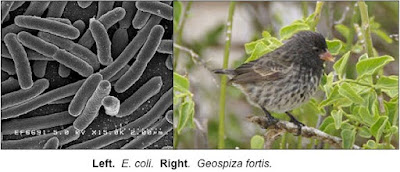
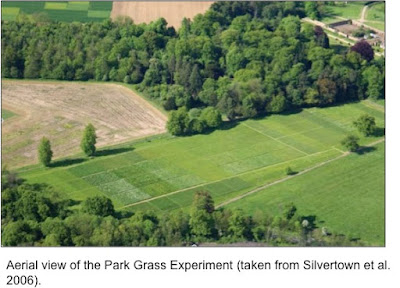
In 2002, Peter Grant and Rosemary Grant published a 30-year study that showed how the direction and magnitude of selection fluctuates wildly over the long term. Environmental change and infrequent hybridization led to a phenotypic trajectory in the Galapagos finches that was not predictable in the short term. Both Lenskis work and the Grants study, however pale in comparison to the Park Grass experiment started by John B. Lawes and Joseph H. Gilbert in 1856 at Rothamsted, Hertfordshire, England. This experiment is the longest running ecological experiment in the world and over 170 publications have come out of it. Although it was started to test how different fertilizers would improve yield, it has since inspired new ecological theory (resource ratio hypotheses), demonstrated long term population dynamics related to life history not detectable over a shorter time period, and provided examples of local adaptation, reproductive isolation and drift. More importantly what this experiment and the two other long-term studies show is that these types of experiments grow in value with time. Although conceived to investigate one scientific question, they can be used to answer a multitude of interesting and often unexplored areas.
The benefits of long term studies like this one seem obvious and yet it is no surprise that they are rare. In fact, in the book The Clock of the Long Now, Stewart Brand laments that science today “is more often driven at a commercial or even fashion velocity than at the deliberate pace of governance or the even slower pace of nature. “ He offers seven reasons for why more scientists are not performing this kind of research.
There are many short term studies that don’t use hypothesis driven research. We only need to look to the new discipline of bioinformatics to see examples of research that look for patterns in DNA sequence and expression data. Furthermore, I disagree with his last point. In such a computer advanced and internet driven society, the database and archival capacity of computers is enormous and the internet makes accessibility less of a problem. I think, that what explains why we don't see many long term experiments, is largely due to the structure and incentive model of granting agencies and academic institutions, specifically in North America.
Long-term experiments or studies require a scientist who is patient, thorough, and slow. The superstars in my field are anything but slow. Instead, as Brand states they tend to “track noisy signals too closely and confuse themselves by making changes before the effects of previous actions are clear.” In other words, publish one paper and then six months later publish another renouncing the results of the first. Why? Because that is how the game is played. The current game rewards prolific at the expense of being profound.
(Although I've heard the common refrain from faculty that some members of a search committee do look for quality, I wonder how many of them have actually read any of the papers from the job candidates. And if that assessment of quality is based on the journal's impact factor or the faculty member's own assessment of the candidate's science? It seems to me that there is a clear unwritten understanding that not every paper that gets into those high impact journals is actually profound and quality science. Here again the time factor creates an atmosphere of rush.)
Prolific is what gets you the chance at a t-t job, grants and ultimately the sweetest of all carrots - tenure. The system in the US (maybe less so in Canada) doesn’t support patient, thorough, slow, and profound science. Here in the US, despite being hired by colleagues, a good scientist can find themselves fired by these same people in 3-5 years when they go up for tenure. Fired or given terminal contracts simply because they didn't have the requisite number of publications or a lack of external funding. But really, how many are actually lucky enough to get funding when success rates at NIH and NSF are 7-12%. In Canada, this doesn’t happen. Once hired as an assistant professor, it’s rare that you don’t get tenure. The screening process for tenure is in the hiring, as my PhD supervisor once told me.
An environment that uses a carrot (tenure) and stick (terminal contract) incentive model narrows people’s focus and destroys creativity. If you don’t believe me, listen to the facts put forward by Daniel Pink, in his TED talk (it's worth 17 minutes of your time) on the science of motivation. Why would you spend time doing science that you think is worthwhile when it doesn’t get you the carrot. Instead, the choice is obvious, you do science that you know will work, ie get you the publications, the grants, all in the drive for tenure. This carrot and stick model leaves no room for innovation and creativity. In fact, TheDude, a tenured professor at a prestigious university told me, “Academia is broken. It's out of control. Getting tenure is the part that makes it broken.” He advises his students to do whatever it takes to get tenure and then “You can start doing the science you really think is worthwhile.” But I wonder what does that say about the science you do up until that point? And really by the time you do get tenure, if all your training is focused on routine, obvious, mechanical science, will you be practiced in innovative thinking such that you will even know which questions to ask?
A second effect that this “if you do this then you will get this or else” atmosphere does is it creates and attracts a particular type of scientist to academia and selects against another. One academic I know, has said that he doesn’t participate in a project unless he sees a publication in it for himself. Cutthroat, yes. But, at least honest. I can think of several colleagues of mine who are so much smarter than the known superstars in my field, both in terms of the quality of science and the level of innovation in their science. But they won’t make it. Why? Because they don’t want to publish just anything for the sake of publishing. And, they would argue, isn’t there enough shit to wade through already? Instead they want the work to matter. They would much rather have solid, well thought out, and fully explored ideas in 3 papers than 10 papers that either test the obvious, review a topic that has already been reviewed, or just do acceptable science. Again words from TheDude, “The problem is the number of papers that anyone individual produces is out of control. If I were the king I would eliminate half the journals especially N and S and limit people to publishing only two papers a year.”
My feeling is that somewhere between the two extremes is probably the right place. Half baked ideas are okay to publish as long as the author acknowledges the limitations and the caveats associated with their incompleteness. And we definitely need innovation and profound, thoughtful scientists. After all, diversity is the stuff of evolution. And progress is only achieved when there is diversity. So the real question is can academia in its current state support both types of scientists (fast and slow) and both types of studies (short and long term)? My belief is that it cannot in its current form. What will be the effect in the long term on the quality of academic science?
“We see nothing of these slow changes in progress, until the hand of time has marked the long lapse of ages.” Darwin (1859).
I guess we shall just have to wait to see the outcome of this long-term experiment.
Interested in reading some of the papers I cited? See below:
Barrick, J. E., D. S. Yu, S. H. Yoon, H. Jeong, T. K. Oh, D. Schneider, R. E. Lenski, and J. F. Kim. 2009. Genome evolution and adaptation in a long-term experiment with Escherichia coli. Nature 461:1243-1247.
Blount et al. (2008) Historical contingency and the evolution of a key innovation in an experimental population of Escheria coli. PNAS 105:7899-7906.
Brand, S. (1999) The Clock of the Long Now: time and responsibilities.
Carroll et al. (2007) Evolution on ecological time-scales. Functional Ecology 21: 387-393.
Grant, P.R. and Grant, R. (2002) Unpredictable evolution in a 30-year study of Darwin’s finches. Science 296: 707-711.
Conway Morris, S (2003) Life's Solution. Cambridge Uni Press, Cambridge, UK.
Silvertown et al. (2006) The Park Grass Experiment 1856-2006: its contribution to ecology. Journal of Ecology 94: 801-814.
Wichman, H.A., J. Millstein, and J.J. Bull. (2005) Adaptive molecular evolution for 13,000 phage generations: a possible arms race. Genetics 170:19-31.
This anecdote is my way of saying, that as academic scientists we make choices on a daily basis to pursue what is expedient at the cost of what may turn out to be interesting, all because of the lack of time. This rushed time frame creates an environment that does not support slow science. And it made me think back to my first post on Slow Science Gets The Shaft: Part 1. And the supposed follow-up that I said I would write and never did. Well folks, here it is. Part 2. Albeit, terribly, terribly slow (bad pun intended) to arrive. It’s a novel – so get yourself a cup of java and a healthy gluten free muffin and sit ‘er down.
In February the Lenski lab celebrated the 50,000 generation mark of their long term E.coli experiment. This experiment was started in Feb 1988 with a single genotype or clone (not a single microbial cell). From this single clone, 12 replicate populations were grown in 12 separate liquid environments (12 flasks with Davis Media broth supplemented with glucose and citrate). The lines are identical, except for a neutral marker that distinguishes six of the lines from the other six. Once in the flask, the populations are grown at 37°C for 24 hrs. After 24h, a subset of the population from each of the 12 flasks are transferred to a new flask with fresh media and the whole growth process is started anew. Furthermore every 75-500 generations (depends on which paper you read), samples are frozen down. These then provide a fossil record with which to ask what were the changes and how many occurred over time, etc. In 24h bacteria, divide approximately 6.67x, which means that Lenski and his students/postdocs have been doing this for every day for 7496.25 days or 20 years.
Lenski is a fantastic evolutionary biologist and a visionary. His experimental designs are awesome. He’s TheMan. If you look at the list of former students and postdocs that have come out of his lab, it reads like a Hollywood’s who’s who in evolutionary biology. I realize the term visionary might seem a little extreme to many, but it’s not. The reason is because Lenski had the foresight to recognize that what’s interesting and unpredictable is found, not in the short term, but often emerges from a long-term pattern. Although many organisms can undergo adaptive change in a relatively few generations and strong selection creates observable differences among populations within a species, it is only through the long-term changes that we can really understand what processes were relevant. As Conway Morris has said, “The possible evolutionary routes are many, but the destinations limited.” As a young academic, Lenski had to invest time and money to follow his curiousity about science, in a way that today’s young tenure track academics, limited by the drive to get tenure and funding, can’t do.
Did it pay off? Yes, of course. Work from these populations demonstrate parallel phenotypic evolution, changes in morphology relative to the ancestor, the evolution of increased DNA supercoiling with parallel changes in gene expression profiles, and the evolution of mutator phenotypes. But there are two major findings that came out only after the experiment was run for 20 years. First last fall, this paper came out in Nature. It showed that the rate of adaptation, as measured by the number of beneficial mutations accrued over time, exhibits a clock-like regularity. This clock-like behaviour is often expected from neutral evolution but not necessarily from adaptive change. Lenskiites were not the first to show this surprising result, Wichman and colleagues (2005), demonstrated a similar result with a bacteriophage growing in a chemostat for 13,000 generations. Whether macroevolution is nothing more than an aggregate of many small events, as Sean Carroll (2007) suggests is only explainable by experiments that quantify those events over the long term.
The second very cool result was that a key innovation happened in one of the replicate populations. Typically, under oxygen rich conditions, E.coli eats and metabolizes glucose (its carbon source), with no ability to use citrate as an energy source. Well guess what? In one of the replicate populations, a citrate-using genotype finally evolved at generation 31,500. That a key innovation evolved so late in the experiment, is telling about the importance of doing long-term studies.

In 2002, Peter Grant and Rosemary Grant published a 30-year study that showed how the direction and magnitude of selection fluctuates wildly over the long term. Environmental change and infrequent hybridization led to a phenotypic trajectory in the Galapagos finches that was not predictable in the short term. Both Lenskis work and the Grants study, however pale in comparison to the Park Grass experiment started by John B. Lawes and Joseph H. Gilbert in 1856 at Rothamsted, Hertfordshire, England. This experiment is the longest running ecological experiment in the world and over 170 publications have come out of it. Although it was started to test how different fertilizers would improve yield, it has since inspired new ecological theory (resource ratio hypotheses), demonstrated long term population dynamics related to life history not detectable over a shorter time period, and provided examples of local adaptation, reproductive isolation and drift. More importantly what this experiment and the two other long-term studies show is that these types of experiments grow in value with time. Although conceived to investigate one scientific question, they can be used to answer a multitude of interesting and often unexplored areas.
The benefits of long term studies like this one seem obvious and yet it is no surprise that they are rare. In fact, in the book The Clock of the Long Now, Stewart Brand laments that science today “is more often driven at a commercial or even fashion velocity than at the deliberate pace of governance or the even slower pace of nature. “ He offers seven reasons for why more scientists are not performing this kind of research.
1. Long term studies aren’t about proving or disproving hypotheses.
2. They don’t generate quick papers, the coin of science
3. They bear no relation to scientific fashion, where the excitement is
4. Not subject to money making patent or copyright.
5. They die when the primary researcher dies.
6. Extremely difficult to maintain funding
7. Archives are expensive and a hassle to service and keep accessible.
There are many short term studies that don’t use hypothesis driven research. We only need to look to the new discipline of bioinformatics to see examples of research that look for patterns in DNA sequence and expression data. Furthermore, I disagree with his last point. In such a computer advanced and internet driven society, the database and archival capacity of computers is enormous and the internet makes accessibility less of a problem. I think, that what explains why we don't see many long term experiments, is largely due to the structure and incentive model of granting agencies and academic institutions, specifically in North America.
Long-term experiments or studies require a scientist who is patient, thorough, and slow. The superstars in my field are anything but slow. Instead, as Brand states they tend to “track noisy signals too closely and confuse themselves by making changes before the effects of previous actions are clear.” In other words, publish one paper and then six months later publish another renouncing the results of the first. Why? Because that is how the game is played. The current game rewards prolific at the expense of being profound.
(Although I've heard the common refrain from faculty that some members of a search committee do look for quality, I wonder how many of them have actually read any of the papers from the job candidates. And if that assessment of quality is based on the journal's impact factor or the faculty member's own assessment of the candidate's science? It seems to me that there is a clear unwritten understanding that not every paper that gets into those high impact journals is actually profound and quality science. Here again the time factor creates an atmosphere of rush.)
Prolific is what gets you the chance at a t-t job, grants and ultimately the sweetest of all carrots - tenure. The system in the US (maybe less so in Canada) doesn’t support patient, thorough, slow, and profound science. Here in the US, despite being hired by colleagues, a good scientist can find themselves fired by these same people in 3-5 years when they go up for tenure. Fired or given terminal contracts simply because they didn't have the requisite number of publications or a lack of external funding. But really, how many are actually lucky enough to get funding when success rates at NIH and NSF are 7-12%. In Canada, this doesn’t happen. Once hired as an assistant professor, it’s rare that you don’t get tenure. The screening process for tenure is in the hiring, as my PhD supervisor once told me.
An environment that uses a carrot (tenure) and stick (terminal contract) incentive model narrows people’s focus and destroys creativity. If you don’t believe me, listen to the facts put forward by Daniel Pink, in his TED talk (it's worth 17 minutes of your time) on the science of motivation. Why would you spend time doing science that you think is worthwhile when it doesn’t get you the carrot. Instead, the choice is obvious, you do science that you know will work, ie get you the publications, the grants, all in the drive for tenure. This carrot and stick model leaves no room for innovation and creativity. In fact, TheDude, a tenured professor at a prestigious university told me, “Academia is broken. It's out of control. Getting tenure is the part that makes it broken.” He advises his students to do whatever it takes to get tenure and then “You can start doing the science you really think is worthwhile.” But I wonder what does that say about the science you do up until that point? And really by the time you do get tenure, if all your training is focused on routine, obvious, mechanical science, will you be practiced in innovative thinking such that you will even know which questions to ask?
A second effect that this “if you do this then you will get this or else” atmosphere does is it creates and attracts a particular type of scientist to academia and selects against another. One academic I know, has said that he doesn’t participate in a project unless he sees a publication in it for himself. Cutthroat, yes. But, at least honest. I can think of several colleagues of mine who are so much smarter than the known superstars in my field, both in terms of the quality of science and the level of innovation in their science. But they won’t make it. Why? Because they don’t want to publish just anything for the sake of publishing. And, they would argue, isn’t there enough shit to wade through already? Instead they want the work to matter. They would much rather have solid, well thought out, and fully explored ideas in 3 papers than 10 papers that either test the obvious, review a topic that has already been reviewed, or just do acceptable science. Again words from TheDude, “The problem is the number of papers that anyone individual produces is out of control. If I were the king I would eliminate half the journals especially N and S and limit people to publishing only two papers a year.”
My feeling is that somewhere between the two extremes is probably the right place. Half baked ideas are okay to publish as long as the author acknowledges the limitations and the caveats associated with their incompleteness. And we definitely need innovation and profound, thoughtful scientists. After all, diversity is the stuff of evolution. And progress is only achieved when there is diversity. So the real question is can academia in its current state support both types of scientists (fast and slow) and both types of studies (short and long term)? My belief is that it cannot in its current form. What will be the effect in the long term on the quality of academic science?
“We see nothing of these slow changes in progress, until the hand of time has marked the long lapse of ages.” Darwin (1859).
I guess we shall just have to wait to see the outcome of this long-term experiment.

Interested in reading some of the papers I cited? See below:
Barrick, J. E., D. S. Yu, S. H. Yoon, H. Jeong, T. K. Oh, D. Schneider, R. E. Lenski, and J. F. Kim. 2009. Genome evolution and adaptation in a long-term experiment with Escherichia coli. Nature 461:1243-1247.
Blount et al. (2008) Historical contingency and the evolution of a key innovation in an experimental population of Escheria coli. PNAS 105:7899-7906.
Brand, S. (1999) The Clock of the Long Now: time and responsibilities.
Carroll et al. (2007) Evolution on ecological time-scales. Functional Ecology 21: 387-393.
Grant, P.R. and Grant, R. (2002) Unpredictable evolution in a 30-year study of Darwin’s finches. Science 296: 707-711.
Conway Morris, S (2003) Life's Solution. Cambridge Uni Press, Cambridge, UK.
Silvertown et al. (2006) The Park Grass Experiment 1856-2006: its contribution to ecology. Journal of Ecology 94: 801-814.
Wichman, H.A., J. Millstein, and J.J. Bull. (2005) Adaptive molecular evolution for 13,000 phage generations: a possible arms race. Genetics 170:19-31.
March 23, 2010
Stop talking like you know the answer.
Hat tip to Sandwalk for sharing Arlin Stoltzfus' new series which argues that "there is a major "disconnect" between how we think about evolution, and how we we would think about it if we were freed from the historical baggage of Darwin's view and the subsequent "Modern Synthesis" (sometimes called "neo-Darwinism")." Installments to this series can also be found at CARB.
March 1, 2010
Dissent gets a fat lip.
About 5 years ago I walked across northern Spain from Somport, France to Santiago, Spain on a trek that is called the Camino el Norte. There, I experienced what I had the hoped would be also possible in the bloggosphere. On the camino, you knew people's names, a little bit about why they were walking, but mainly what you knew of them was their direct experiences walking on the camino. There was never any discussion about what they did. And whenever anyone tried to ask - so what do you do? The answer was always the same. I walk on the camino.
So I had naively thought that the bloggosphere would be like the camino. Thinking that 'the bloggosphere' would be a place without prejudice and that the hierarchy which existed in the real academic world would somehow be absent in this virtual one. In my ideal, the virtual world was a more level playing field where an individual's position (PhD student, postdoc, faculty) was irrelevant and all that mattered was that you walked in the academic world.
Much discussion has been written about young female scientist (YFS) and her experience. I use the word “about” because in these discussions, often taking place in the comments section of another’s blog, her actual voice is absent. I recognize that YFS cannot always present but the representation of her experience is noticeably absent.
Second, I have also noticed that during this discussion a number of disparging remarks are written largely (but not always) by faculty bloggers. Usually it comes in this form,
This kind of comment invalidates young female scientist’s direct experience of the academic camino. It does so because it inverts the power dynamic inherent in the academic hierarchy by suggesting that the individual is to blame for their current circumstance. In a fair and just system, based on a meritocracy, each person receives an equitable lot. That the system is fair and just is implicitly assumed by the commentator. By asserting that young female scientist is speaking on behalf of all postdocs, the commentator deflects any consideration away from what aspects of the system led to this experience. Lastly, the author suggests that there is a generalized experience of the academic camino, but that this is not it.
The concern that this one voice, identified as “marginal” will become the authority of the postdoctoral experience, is expressed repeatedly both in comments and in blog posts on the topic. In protecting the clear and distinct rules of the road, much effort is expended to ensure that this experience is seen as a singular experience.
Here, the author emphasizes the “otherness” of young female scientist’s experience. Although prefacing the comments by suggesting that s/he doesn't want to forget what the postdoc experience can be, the author immediately uses language to describe MsPhD and company's posts as "extreme ranting" and comments that "skirts the far edges of the distribution." Because these experiences originate from what is a decidedly emotional space, they are deemed not real or valid. Lastly, the author of this comment revokes any validity to YFS's voice by suggesting that if YFS just changed her filter she might have a different experience. Hers is a perceived injustice not a real one.
Finally let’s look at a more recent exchange at PLT’s blog between largely faculty bloggers:
Again I draw attention to the quality of the language used by the commentators. It is paternalistic and condescending. The commentators employ a language that reminds postdocs or “children” that they can only participate in the academic camino because they, the faculty/parents allow it. But in the above exchange, postdocs are clearly told that they are not equals and that they will not be treated as equals even though a “senior” postdoc may be days or months away from being in a tenure track position.
These types of verbal exchanges, described above, use language in a way that sets the faculty blogger in the role where they decide what experiences are authentic and what should be dismissed as merely “emotional.” As was the case with black women during much of the feminist movement, if black women dared to criticize the white feminist movement, their voices were tuned out, dismissed, and silenced. Only those whose experiences echoed the sentiments of the dominant discourse were heard (Bell Hooks From Margin to Center).
Language has the power to inspire and motivate us, as Haig Bosmajian suggests in his essays The Language of Oppression, but it can also be used to justify and maintain a hierarchy by taking possession of experience.
Academia is an institutionalized hierarchy and as such it has the potential to create a very real and lived experience of oppression. Embedded in this hierarchy is privilege and class. Chairs or Directors of Departments have power over faculty. Faculty have power over postdocs, graduate students, and undergrads. Postdocs have power over undergrads and sometimes grad students. Grad students have power over undergrads. At some level, each of us that walk along the academic road carry the weight of that privilege.
How do we ensure that dissenting voices are not ghettoized and ruthlessly critiqued? It is too easy to use language that is less than mindful because it ensures “blog traffic.” I have, in the past, hidden behind pseudoanonymity assuming that it gives me the freedom to say and write what I want. And I think many bloggers view the bloggosphere as “outside the constraints of the scientific and academic writing.”
But is it really?
Our everyday reality is informed and shaped by politics and is therefore necessarily political. Even my choices to identify myself with specific labels: girl, postdoc, Canadian, are political. I write to and about my personal experience because I believe it should be given voice. But in writing about my personal experience, should I dismiss or marginalize others? If, we cease to focus on the simplistic stance that “faculty are the enemy” or “postdocs are children,” then we have an opportunity to examine our role in the maintenance of oppressive social circumstances. A broader understanding of how our personal actions can affect the political sphere of another’s life cannot arise if those whose experiences are different are simply quieted.
The totality of the academic road includes all experiences – good and bad.
And to get to that place of a broader under-standing, it requires that we are “standing under” or “in” someone’s experience for long enough that this person’s experience penetrates and dissolves our judgements.
So I had naively thought that the bloggosphere would be like the camino. Thinking that 'the bloggosphere' would be a place without prejudice and that the hierarchy which existed in the real academic world would somehow be absent in this virtual one. In my ideal, the virtual world was a more level playing field where an individual's position (PhD student, postdoc, faculty) was irrelevant and all that mattered was that you walked in the academic world.
Much discussion has been written about young female scientist (YFS) and her experience. I use the word “about” because in these discussions, often taking place in the comments section of another’s blog, her actual voice is absent. I recognize that YFS cannot always present but the representation of her experience is noticeably absent.
Second, I have also noticed that during this discussion a number of disparging remarks are written largely (but not always) by faculty bloggers. Usually it comes in this form,
Once again, you're blaming "the system" for your shitty situation. You're also generalizing, again, that your situation automatically means that all postdoc experiences completely suck and that those people who move on to faculty positions did so at your expense.
This kind of comment invalidates young female scientist’s direct experience of the academic camino. It does so because it inverts the power dynamic inherent in the academic hierarchy by suggesting that the individual is to blame for their current circumstance. In a fair and just system, based on a meritocracy, each person receives an equitable lot. That the system is fair and just is implicitly assumed by the commentator. By asserting that young female scientist is speaking on behalf of all postdocs, the commentator deflects any consideration away from what aspects of the system led to this experience. Lastly, the author suggests that there is a generalized experience of the academic camino, but that this is not it.
The concern that this one voice, identified as “marginal” will become the authority of the postdoctoral experience, is expressed repeatedly both in comments and in blog posts on the topic. In protecting the clear and distinct rules of the road, much effort is expended to ensure that this experience is seen as a singular experience.
"I too worry about forgetting what it was like. That's why I read MsPHD and company. It is a reminder, even if some of it skirts the far edges of the distribution. Personally I am helped in my reading of MsPHD's more extreme ranting because I do in fact know a lab quite well that could produce a situation much as she perceives it.”
Here, the author emphasizes the “otherness” of young female scientist’s experience. Although prefacing the comments by suggesting that s/he doesn't want to forget what the postdoc experience can be, the author immediately uses language to describe MsPhD and company's posts as "extreme ranting" and comments that "skirts the far edges of the distribution." Because these experiences originate from what is a decidedly emotional space, they are deemed not real or valid. Lastly, the author of this comment revokes any validity to YFS's voice by suggesting that if YFS just changed her filter she might have a different experience. Hers is a perceived injustice not a real one.
Finally let’s look at a more recent exchange at PLT’s blog between largely faculty bloggers:
“Ooooooh boy.... Here comes the rain.
Whatever you do, don't mention the tattoos.
Well, the fact that the commenter believes that TT faculty suddenly develop amnesia about their postdoc experiences the moment they become Asst. Profs suggests that nothing any TT faculty member says will make any difference to her. This is fundamentally not a position that can be reasoned with.
From what I've observed, it seems to me that the relationship between a senior postdoc and her advisor is similar in some ways to that between a 17-year-old ready to get the hell out of her parents' house and the parents. Perhaps it takes becoming a parent to see things from the other side.
...exactly. Great analogy!
…makes the point that postdocs need to work within the system too, and I couldn't agree more.
It's been known for a long time the system was in trouble (COSEPUP, 2000). But it takes a long time and lot of effort to make changes.
happy or sad, all postdocs (and ex-postdocs!) should have the druthers to work the NPA, their local Postdoc Office, call your local reps. DO SOMETHING instead of just moaning.
Sack up or get out (of science or your shitty lab). Either way stop wasting your life- there's fuck all of it and it doesn't come with a recharge cord.”
Again I draw attention to the quality of the language used by the commentators. It is paternalistic and condescending. The commentators employ a language that reminds postdocs or “children” that they can only participate in the academic camino because they, the faculty/parents allow it. But in the above exchange, postdocs are clearly told that they are not equals and that they will not be treated as equals even though a “senior” postdoc may be days or months away from being in a tenure track position.
These types of verbal exchanges, described above, use language in a way that sets the faculty blogger in the role where they decide what experiences are authentic and what should be dismissed as merely “emotional.” As was the case with black women during much of the feminist movement, if black women dared to criticize the white feminist movement, their voices were tuned out, dismissed, and silenced. Only those whose experiences echoed the sentiments of the dominant discourse were heard (Bell Hooks From Margin to Center).
Language has the power to inspire and motivate us, as Haig Bosmajian suggests in his essays The Language of Oppression, but it can also be used to justify and maintain a hierarchy by taking possession of experience.
Academia is an institutionalized hierarchy and as such it has the potential to create a very real and lived experience of oppression. Embedded in this hierarchy is privilege and class. Chairs or Directors of Departments have power over faculty. Faculty have power over postdocs, graduate students, and undergrads. Postdocs have power over undergrads and sometimes grad students. Grad students have power over undergrads. At some level, each of us that walk along the academic road carry the weight of that privilege.
How do we ensure that dissenting voices are not ghettoized and ruthlessly critiqued? It is too easy to use language that is less than mindful because it ensures “blog traffic.” I have, in the past, hidden behind pseudoanonymity assuming that it gives me the freedom to say and write what I want. And I think many bloggers view the bloggosphere as “outside the constraints of the scientific and academic writing.”
But is it really?
Our everyday reality is informed and shaped by politics and is therefore necessarily political. Even my choices to identify myself with specific labels: girl, postdoc, Canadian, are political. I write to and about my personal experience because I believe it should be given voice. But in writing about my personal experience, should I dismiss or marginalize others? If, we cease to focus on the simplistic stance that “faculty are the enemy” or “postdocs are children,” then we have an opportunity to examine our role in the maintenance of oppressive social circumstances. A broader understanding of how our personal actions can affect the political sphere of another’s life cannot arise if those whose experiences are different are simply quieted.
The totality of the academic road includes all experiences – good and bad.
And to get to that place of a broader under-standing, it requires that we are “standing under” or “in” someone’s experience for long enough that this person’s experience penetrates and dissolves our judgements.
Before you know what kindness really is
you must lose things, feel the future dissolve in a moment
like salt in a weakened broth.
What you held in your hand,
what you counted and carefully saved,
all this must go so you know
how desolate the landscape can be
between the regions of kindness.
Before you learn the tender gravity of kindness,
you must travel where the
Indian in a white poncho lies dead
by the side of the road.
You must see how this could be you, how he too was someone who journeyed through the night
with plans and the simple breath
that kept him alive.
Before you know kindness
as the deepest thing inside,
you must know sorrow
as the other deepest thing.
You must wake up with sorrow.
You must speak to it till your voice
catches the thread of all sorrows
and you see the size of the cloth.
Then it is only kindness
that makes sense anymore,
only kindness that ties your shoes
and sends you out into the day
to mail letters and purchase bread,
only kindness that raises its head
from the crowd of the world to say
it is I you have been looking for,
and then goes with you every where
like a shadow or a friend. Naomi Shihab Nye
June 13, 2009
Pseudoanonymity - Part II
Thanks for all your comments. I really appreciate hearing what people have to say or hearing about how you have decided to use the blog. I'll take a few days and then I'll make my decision.
June 11, 2009
Pseudoanonymity
I haven't been writing anything for a long while because I recently discovered that a faculty member at LargeUniversityInCanada (LUC) knows about my blog. It's not clear that she has read it or told other faculty about it - but it seems just a matter of time.
I have several friends who read this blog but I never thought one of them would tell faculty about it. I thought it was understood that because I wrote under a pseudonym that people would respect my desire to remain anonymous. I know that the alternative is that they had no idea I wanted to remain pseudoanonymous.
I can't tell you how freaked out I am right now.

"Outing a blogger" seems a common occurence in the bloggosphere - a month ago (?) another blogger was outed and she was forced to close her blog. After that I remember many bloggers informing their readers that they would be going through their archives, deleting anything that was incriminating.
There seems something in our psyche (perhaps Jerry Springer) that inspires us to uncover and reveal other people's secrets. A while back, Dr. Isis was attending a conference and from her blog it sounded like many people tried to find out who she really was. This happened again during her Letters to Our Daughters Project.
Although I have only written disparaging remarks about two faculty at LUC (and really just one because I've told Aspergers what I think of him), I am still concerned that my colleagues, my supervisor General Solution Guru (from whom I need letters of reference), and potential employers in the field of biology will read this.
So now I ask myself the question - why am I writing this and why the fuck did I tell anyone about it?
The truth is I write this blog because it helps me sort out my thoughts on my career choices, scientific philosophy, and it is a place where I can be honest about my emotional state.
And I thought the reason I had told a few of my friends was because I wanted to keep them up to date on how I was doing. But frankly, if that were really the case a group email would have sufficed. Be honest Girlpostdoc - come on - what was the real reason. Okay, perhaps I was hoping more people would read the blog and in reading this blog found it interesting, I would feel like I had accomplished something. Oh, the irony of "fame."
Well, so now I am left with a few choices:
I have several friends who read this blog but I never thought one of them would tell faculty about it. I thought it was understood that because I wrote under a pseudonym that people would respect my desire to remain anonymous. I know that the alternative is that they had no idea I wanted to remain pseudoanonymous.
I can't tell you how freaked out I am right now.

"Outing a blogger" seems a common occurence in the bloggosphere - a month ago (?) another blogger was outed and she was forced to close her blog. After that I remember many bloggers informing their readers that they would be going through their archives, deleting anything that was incriminating.
There seems something in our psyche (perhaps Jerry Springer) that inspires us to uncover and reveal other people's secrets. A while back, Dr. Isis was attending a conference and from her blog it sounded like many people tried to find out who she really was. This happened again during her Letters to Our Daughters Project.
Although I have only written disparaging remarks about two faculty at LUC (and really just one because I've told Aspergers what I think of him), I am still concerned that my colleagues, my supervisor General Solution Guru (from whom I need letters of reference), and potential employers in the field of biology will read this.
So now I ask myself the question - why am I writing this and why the fuck did I tell anyone about it?
The truth is I write this blog because it helps me sort out my thoughts on my career choices, scientific philosophy, and it is a place where I can be honest about my emotional state.
And I thought the reason I had told a few of my friends was because I wanted to keep them up to date on how I was doing. But frankly, if that were really the case a group email would have sufficed. Be honest Girlpostdoc - come on - what was the real reason. Okay, perhaps I was hoping more people would read the blog and in reading this blog found it interesting, I would feel like I had accomplished something. Oh, the irony of "fame."
Well, so now I am left with a few choices:
1. Continue as if nothing happened.If you have encountered this problem, what did you do? Or if you just want to weigh in, I could use a little input.
2. Continue but never write anything about others on the blog again.
3. Shut down the blog.
4. Shut down the blog, but start up another telling noone.
5. Make the blog accessible to only a few people.
May 26, 2009
Slow Science gets the Shaft - Part I
This blog post will be the first of a three-part series on my ideas of slow science.
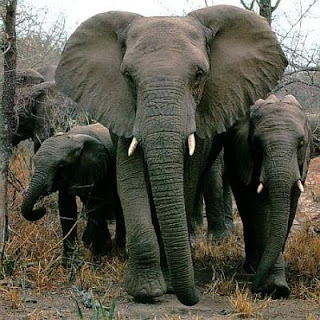 Today, we had a seminar presentation by an "old school" scientist who told us some amazing stories about a group of organisms that he had worked on since the 1950s. It wasn't a slick powerpoint talk with fancy slides, a simple one with pictures of the different representative species. With each picture he told us about key innovations in the group, what these things eat, their ecology, morphological differences, predatory behaviour - in other words basic biology.
OldSchool is a naturalist. He doesn't make fancy models, nor do sophisticated statistics on his data. But he knows everything about the group that he works on because he has been accumulating data slowly and over the long-term. Fifty years is a heck of a long time! Instead of chasing the "sexy" and "cutting edge" questions that happen to be the hot items that year, he's a "sit and wait" scientist that lets the interesting questions arise from what he observes and experiences with these organisms in their own habitats.
OldSchool does slow science and I think that this breed of scientist is going extinct to be replace by Fast'nFurious scientists; all of whom clamber over each other to get papers in Science and Nature. Crabs in a bucket. Frankly, given the rewards, ie a scientific career that is seen as set for life, why wouldn't they?
Often to get those high impact papers, I think many choose to work on model organisms because of the cost-benefit ratio. Given the nature of the academic treadmill, we don't have the luxury of spending time with a system to acquire basic natural history questions because that takes too long. And if you choose that road in my field, it can often mean fewer publications and papers with "less impact." Ultimately leading to fewer job opportunities and less funding. And universities value scientists directly in proportion to how much money they bring in, i.e. $$$=good little scientist.
And really I am as much a party to this game as anyone. Although, I worked on an organism during my PhD, whose first name was Large and whose last name was Slow, when given the choice to work on a similar sort of organism or switch and work with a small fast one, I opted to work on a small and fast one for my postdoc. (The humour in how the size of my study species mirrors the school I'm at, is not lost on me. LargeandSlow at LargeUniversityInCanada and SmallandFast at SmallUniversity in SmallTown America.)
Well, honestly I thought - a fast and small organism will result in more publications.
I think if OldSchool were to apply for a job now (with the same qualifications he had when he started), I don't think his application would even see the light of day. And, in my opinion, that would be a huge loss to science.
The seminar today made me wonder if our focus on fast science will impact our understanding of the natural world. By fast science, I mean a few different things: what we study, how we set up experiments and for how long we run them. The focus of this blogpost will be on what we study.
Much of the work in my field has been conducted on species that are small and fast: Drosophila, annual plants, viruses, etc. These species are easily amenable to field, greenhouse and/or laboratory research. And because they have short generation times, experiments can be conducted in a timely manner (i.e., completed within the timeframe of a Masters or Ph.D). This is not to say that people don't attempt to work on LargeandSlow species, but there is a lag in the payback.
Okay so before I go all postal on the fast organism I need to demonstrate if there really a bias in what we know. Do we have equal information on organisms with vastly different generation times?
I did a quick little survey, nothing I would ever stake my scientific career on, but it yielded some interesting things. In the Wiley InterScience Life Science Search page, I did three types of word searches. The first was simply finding the total number of articles published in Wiley journals for a given organism (eg "bacteria", "Drosophila").
The graph below shows what I think we all know is obvious. Of the total number of articles written, most of our knowledge is on the following organisms: mouse, fish, and bacteria. Not surprising really that we have a strong bias toward biomedical and applied research.
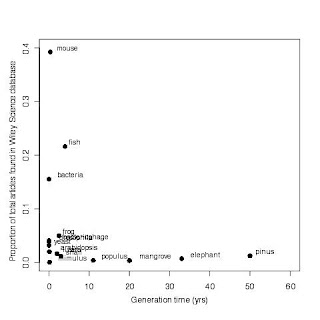 But in my second search instead of just typing in the name of the organism, I used the following keywords: “bacteria and ecology”, “bacteria and evolution. ” The results were much the same. The rank order was different (fish, mouse, bacteriophage, bacteria), but the shape of the curve suggests that even in ecology and evolution, research is focused on model organisms with a short generation times. There are 136X more articles on virus ecology and evolution, than there are about a deciduous tree.
As part of the MTV generation, I understand the desire for immediate gratification. This need for immediate results and productivity is heightened under our current climate of publish or perish without any money in an unmarked grave.
But I think something is lost when what we know of the natural world is observed using a lens that is made up of organisms with “easy” life cycles.
As Charles Darwin said, “...it is always advisable to perceive clearly our ignorance.”
“False facts are highly injurious to the progress of science, for they often endure long; but false views, if supported by some evidence, do little harm, for every one takes a salutary pleasure in proving their falseness.” Charles Darwin
 Today, we had a seminar presentation by an "old school" scientist who told us some amazing stories about a group of organisms that he had worked on since the 1950s. It wasn't a slick powerpoint talk with fancy slides, a simple one with pictures of the different representative species. With each picture he told us about key innovations in the group, what these things eat, their ecology, morphological differences, predatory behaviour - in other words basic biology.
OldSchool is a naturalist. He doesn't make fancy models, nor do sophisticated statistics on his data. But he knows everything about the group that he works on because he has been accumulating data slowly and over the long-term. Fifty years is a heck of a long time! Instead of chasing the "sexy" and "cutting edge" questions that happen to be the hot items that year, he's a "sit and wait" scientist that lets the interesting questions arise from what he observes and experiences with these organisms in their own habitats.
OldSchool does slow science and I think that this breed of scientist is going extinct to be replace by Fast'nFurious scientists; all of whom clamber over each other to get papers in Science and Nature. Crabs in a bucket. Frankly, given the rewards, ie a scientific career that is seen as set for life, why wouldn't they?
Often to get those high impact papers, I think many choose to work on model organisms because of the cost-benefit ratio. Given the nature of the academic treadmill, we don't have the luxury of spending time with a system to acquire basic natural history questions because that takes too long. And if you choose that road in my field, it can often mean fewer publications and papers with "less impact." Ultimately leading to fewer job opportunities and less funding. And universities value scientists directly in proportion to how much money they bring in, i.e. $$$=good little scientist.
And really I am as much a party to this game as anyone. Although, I worked on an organism during my PhD, whose first name was Large and whose last name was Slow, when given the choice to work on a similar sort of organism or switch and work with a small fast one, I opted to work on a small and fast one for my postdoc. (The humour in how the size of my study species mirrors the school I'm at, is not lost on me. LargeandSlow at LargeUniversityInCanada and SmallandFast at SmallUniversity in SmallTown America.)
Well, honestly I thought - a fast and small organism will result in more publications.
I think if OldSchool were to apply for a job now (with the same qualifications he had when he started), I don't think his application would even see the light of day. And, in my opinion, that would be a huge loss to science.
The seminar today made me wonder if our focus on fast science will impact our understanding of the natural world. By fast science, I mean a few different things: what we study, how we set up experiments and for how long we run them. The focus of this blogpost will be on what we study.
Much of the work in my field has been conducted on species that are small and fast: Drosophila, annual plants, viruses, etc. These species are easily amenable to field, greenhouse and/or laboratory research. And because they have short generation times, experiments can be conducted in a timely manner (i.e., completed within the timeframe of a Masters or Ph.D). This is not to say that people don't attempt to work on LargeandSlow species, but there is a lag in the payback.
Okay so before I go all postal on the fast organism I need to demonstrate if there really a bias in what we know. Do we have equal information on organisms with vastly different generation times?
I did a quick little survey, nothing I would ever stake my scientific career on, but it yielded some interesting things. In the Wiley InterScience Life Science Search page, I did three types of word searches. The first was simply finding the total number of articles published in Wiley journals for a given organism (eg "bacteria", "Drosophila").
The graph below shows what I think we all know is obvious. Of the total number of articles written, most of our knowledge is on the following organisms: mouse, fish, and bacteria. Not surprising really that we have a strong bias toward biomedical and applied research.
 But in my second search instead of just typing in the name of the organism, I used the following keywords: “bacteria and ecology”, “bacteria and evolution. ” The results were much the same. The rank order was different (fish, mouse, bacteriophage, bacteria), but the shape of the curve suggests that even in ecology and evolution, research is focused on model organisms with a short generation times. There are 136X more articles on virus ecology and evolution, than there are about a deciduous tree.
As part of the MTV generation, I understand the desire for immediate gratification. This need for immediate results and productivity is heightened under our current climate of publish or perish without any money in an unmarked grave.
But I think something is lost when what we know of the natural world is observed using a lens that is made up of organisms with “easy” life cycles.
As Charles Darwin said, “...it is always advisable to perceive clearly our ignorance.”
May 5, 2009
Creationism and college students - the battle for young minds.
Creationism is a popular belief in the United States and not surprisingly here in SmallTown, religion is ubiquitous. In a town of 21,000 people, there are 21 different churches, that's 1 church for every thousand people. There's one church that takes up a entire block of the town and is the size of Walmart. On Sunday morning it's parking lot is packed, I'm not kidding, packed with cars. The density of churches here is akin to the density of Tim Hortons in eastern Canada. I guess we Canadians prefer the sweet cakey goodness of doghnuts to hell and damnation.
(At least this Canadian does.)
I'm not a religious person at all, although I grew up in a family where religion (not Christianity) was a big deal. And in the last few years of my dad's life, he and I would have these phone conversations that would trickle down into the difficult waters of my non-religious beliefs.

I don't object to other people holding whatever beliefs they want, but I seriously object when those belief systems are used to discriminate against others or attempts are made to disguise faith/belief within a scientific framework. Religion is not science. Science is the use of "evidence to construct testable explanations and predictions of natural phenomena, as well as the knowledge generated through this process" (National Academy of Sciences, 2008). Religon is founded in belief and faith.
The National Academy of Sciences has officially stated that "acceptance of the evidence for evolution can be compatible with religious faith," but they are clear that intelligent design or creationism just shouldn't be taught as equals in a science class.
That's why when I read this new study in the May issue of BioScience, I was both concerned and happy that someone had finally suggested there may be a link to how college students recieve scientific facts, evolution to be precise. This study found that college students will either accept or question evolution, depending on how it was treated in high school. In a survey of 1,008 students taking introductory biology classes at the University of Minnesota, researchers asked students if their high-school biology course included (a) evolution but not creationism, (b) creationism but not evolution, (c) both evolution and creationism, or (d) neither evolution nor creationism. They then used a Measure of Acceptance of the Theory of Evolution (MATE) (Rutledge and Sadler 2007) to determine how they viewed evolution.
The study showed that students whose high-school biology class included creationism (with or without evolution) were more likely to accept creationism than were students whose high-school biology class included only evolution. Furthermore, students whose high-school biology course included evolution (and not creationism) were more likely to accept evolution-based statements than were students whose high-school biology course did not include evolution. Seventy-two to 78 percent of students exposed to evolution agreed that it is scientifically valid while 57 to 59 percent of students who were exposed to creationism agreed that it can be validated.
What surprised me the most was to read that approximately 20 to 35 percent of high-school biology teachers in the United States include creationism in their science curricula. And that reports that suggest one-fourth of biology teachers believe that creationism has a valid scientific foundation (Moore and Kraemer 2005).
The survey also had some interesting comments written by students. Of the 45.3 percent of students that advocated creationism, some wrote,
As scientists, we must be concerned about the malpractice of high school science teachers because they have an impact on a new generation of citizenry. We are educating students who lack the ability to understand and accept one of the most important and unifying ideas of modern science. The distinction between science and religion is necessary in order to make informed and thoughtful decisions about a vast majority of social and political issues that can have enormous consequences for future generations. Imagine trying to make decisions about combating epidemics, like SARS, without consideration to the fact that organisms evolve.
Furthermore, what kind scientists are in the making in America if intelligent design is seen as valid science? These types of views reject scientific findings, well-established facts, and scientific methods in favour of unsubstantiated claims.
Science is embedded in a society. And thus the types of questions asked and funded, scientific norms, and the trajectories of scientists are affected by cultural and political values. Right now, Americans lead the world in scientific discovery and innovation, but if these young voices have any say in political policies, science in the US could end up like bourgeois pseudosciences in Russia under Stalin - on its way to watering their crops with gatorade.
(At least this Canadian does.)
I'm not a religious person at all, although I grew up in a family where religion (not Christianity) was a big deal. And in the last few years of my dad's life, he and I would have these phone conversations that would trickle down into the difficult waters of my non-religious beliefs.

I don't object to other people holding whatever beliefs they want, but I seriously object when those belief systems are used to discriminate against others or attempts are made to disguise faith/belief within a scientific framework. Religion is not science. Science is the use of "evidence to construct testable explanations and predictions of natural phenomena, as well as the knowledge generated through this process" (National Academy of Sciences, 2008). Religon is founded in belief and faith.
The National Academy of Sciences has officially stated that "acceptance of the evidence for evolution can be compatible with religious faith," but they are clear that intelligent design or creationism just shouldn't be taught as equals in a science class.
That's why when I read this new study in the May issue of BioScience, I was both concerned and happy that someone had finally suggested there may be a link to how college students recieve scientific facts, evolution to be precise. This study found that college students will either accept or question evolution, depending on how it was treated in high school. In a survey of 1,008 students taking introductory biology classes at the University of Minnesota, researchers asked students if their high-school biology course included (a) evolution but not creationism, (b) creationism but not evolution, (c) both evolution and creationism, or (d) neither evolution nor creationism. They then used a Measure of Acceptance of the Theory of Evolution (MATE) (Rutledge and Sadler 2007) to determine how they viewed evolution.
The study showed that students whose high-school biology class included creationism (with or without evolution) were more likely to accept creationism than were students whose high-school biology class included only evolution. Furthermore, students whose high-school biology course included evolution (and not creationism) were more likely to accept evolution-based statements than were students whose high-school biology course did not include evolution. Seventy-two to 78 percent of students exposed to evolution agreed that it is scientifically valid while 57 to 59 percent of students who were exposed to creationism agreed that it can be validated.
What surprised me the most was to read that approximately 20 to 35 percent of high-school biology teachers in the United States include creationism in their science curricula. And that reports that suggest one-fourth of biology teachers believe that creationism has a valid scientific foundation (Moore and Kraemer 2005).
The survey also had some interesting comments written by students. Of the 45.3 percent of students that advocated creationism, some wrote,
I believe in creationism and intelligent design.And from those that expressed uncertainty (34 percent)
I do not believe [evolution] happened.
I am a little confused about it.Shocking.
I really don't know what to think.
I don't know enough on the issue to have much [of] an opinion.
As scientists, we must be concerned about the malpractice of high school science teachers because they have an impact on a new generation of citizenry. We are educating students who lack the ability to understand and accept one of the most important and unifying ideas of modern science. The distinction between science and religion is necessary in order to make informed and thoughtful decisions about a vast majority of social and political issues that can have enormous consequences for future generations. Imagine trying to make decisions about combating epidemics, like SARS, without consideration to the fact that organisms evolve.
Furthermore, what kind scientists are in the making in America if intelligent design is seen as valid science? These types of views reject scientific findings, well-established facts, and scientific methods in favour of unsubstantiated claims.
Science is embedded in a society. And thus the types of questions asked and funded, scientific norms, and the trajectories of scientists are affected by cultural and political values. Right now, Americans lead the world in scientific discovery and innovation, but if these young voices have any say in political policies, science in the US could end up like bourgeois pseudosciences in Russia under Stalin - on its way to watering their crops with gatorade.
March 16, 2009
Well said.
A friend sent me this and I couldn't agree more.

Source: Piled Higher and Deeper (http://www.phdcomics.com)

Source: Piled Higher and Deeper (http://www.phdcomics.com)
March 8, 2009
Publish or Perish
It always amazes me how uncomfortable people are with the idea of death.
HippieHusband and I have been away for more than a week. We are >25% of the post-docs and thus when we are absent from seminars, lab meetings etc, people notice and they ask questions. Thus, most if not all in my lab group and department know about my father dying. But I'd say its about 50-50 the number of people who come up to me and say, "I'm so sorry to hear about your father," and those who don't say anything, not even 'hello', but just look at me as if I had syphillis.
Are they afraid of how I might respond. Maybe they think that I would burst into tears at the mere mention of my father. It doesn't work that way. I can tell you that grief comes in waves. So people, you don't have to worry about me getting all Edvard Munch on you.
Grief has many emotional stages (guilt, anger, sadness, etc) and physical manifestations (nightmares, nausea, loss of appetite, etc.). The intensity of the emotion is mirrored in the type of death that happens and how close you are to the person that died. The reality is that grief is a completely personal and individual experience. As is the case with many emotions, you can feel several simultaneously. Right now, in case you didn't guess, anger is my bitch.
Perhaps, the people who don't say anything are afraid of something else like their own mortality. The prospect of death has them in a hammerlock choke. Frankly, I'd prefer it if they would just say, "I can't say anything to you because you and your experience make me afraid of all that could come to pass." It's definitely better than feeling as if I was walking around with a fishbowl on my head.
Researchers at the University of Kentucky have some explanation for this behaviour. They performed a series of experiments involving 432 undergraduate volunteers. Half of the students were asked to contemplate dying and being dead, while the other half of the group was asked to think and write about dental pain. The researchers evaluated the two groups using standard psychological questionnaires (measures explicit emotional state) and word association tests (measures implicit emotional state).
They found no difference in scores between the groups on the explicit tests of emotion and affect, ie the standard psychological questionnaires, but differences were found in the tests that measure unconscious emotions. Students who were preoccupied with death tended to generate significantly more positive-emotion words and word matches than the dental-pain group. Death illicits a psychological immune response, according to Daniel Gilbert, a psychology professor at Harvard. Here's what he said in a Time Magazine article ,
I want to thank everyone who wrote on my blog, sent me an email, or called. In these 'Munchian' times, it is the small thoughts that count.
HippieHusband and I have been away for more than a week. We are >25% of the post-docs and thus when we are absent from seminars, lab meetings etc, people notice and they ask questions. Thus, most if not all in my lab group and department know about my father dying. But I'd say its about 50-50 the number of people who come up to me and say, "I'm so sorry to hear about your father," and those who don't say anything, not even 'hello', but just look at me as if I had syphillis.
Are they afraid of how I might respond. Maybe they think that I would burst into tears at the mere mention of my father. It doesn't work that way. I can tell you that grief comes in waves. So people, you don't have to worry about me getting all Edvard Munch on you.
Grief has many emotional stages (guilt, anger, sadness, etc) and physical manifestations (nightmares, nausea, loss of appetite, etc.). The intensity of the emotion is mirrored in the type of death that happens and how close you are to the person that died. The reality is that grief is a completely personal and individual experience. As is the case with many emotions, you can feel several simultaneously. Right now, in case you didn't guess, anger is my bitch.
Perhaps, the people who don't say anything are afraid of something else like their own mortality. The prospect of death has them in a hammerlock choke. Frankly, I'd prefer it if they would just say, "I can't say anything to you because you and your experience make me afraid of all that could come to pass." It's definitely better than feeling as if I was walking around with a fishbowl on my head.
Researchers at the University of Kentucky have some explanation for this behaviour. They performed a series of experiments involving 432 undergraduate volunteers. Half of the students were asked to contemplate dying and being dead, while the other half of the group was asked to think and write about dental pain. The researchers evaluated the two groups using standard psychological questionnaires (measures explicit emotional state) and word association tests (measures implicit emotional state).
They found no difference in scores between the groups on the explicit tests of emotion and affect, ie the standard psychological questionnaires, but differences were found in the tests that measure unconscious emotions. Students who were preoccupied with death tended to generate significantly more positive-emotion words and word matches than the dental-pain group. Death illicits a psychological immune response, according to Daniel Gilbert, a psychology professor at Harvard. Here's what he said in a Time Magazine article ,
The number of people actually confronted with death at any given time is extremely small, the number who are going to die at some point is 100%. We are all walking around, unlike every other animal, thinking, 'Oh, my God, eventually this all ends. This creates a state of existential dread. This knowledge pervades our everyday existence.It's because we don't confront death daily or make it part of our existence that it becomes this existential dread. We spend millions of dollars trying to extend our lives and too many hours hanging onto youth. Ironically, we as a society are disconnected to death. I think this is especially true in academia where we are so focused on the 'birth processes' of research. It is no surprise that we have the mantra 'publish or perish.' Ultimately though, despite our grasp at immortality, all things perish.
I want to thank everyone who wrote on my blog, sent me an email, or called. In these 'Munchian' times, it is the small thoughts that count.
While I thought that I was learning how to live, I have been learning how to die. ~Leonardo Da Vinci
Subscribe to:
Posts (Atom)
-
 I just finished reading an engaging article in The New Yorker, called " The Truth Wears Off. " The author Jonah Lehrer talks abou...
 -
 [These ideas on Slow Science are a work-in-progress a first draft of sorts. With some help from those of you who read this post, via a chal...
 -
 Okay peeps, I know that many of you are lurkers at this website (according to the visits from the sitemeter stats). But I want you to come ...